
It is your customer's freight, and your reputation
A 3PL is judged on things it did not do. Freight arrives damaged from a carrier, sits in your building, ships to the end customer, and the complaint comes to you — because you are the one holding it.
Being right is not the same as being trusted
You can usually establish, eventually, that a given piece of damage was not your fault. That process involves a week of email, some photos of debatable quality, and a customer who spent that week believing their 3PL damaged their goods. Winning that argument costs more than losing it would have.
The alternative is being the one who raises it. Damage found on inbound freight and reported to your client the same morning is a service you are providing. The identical damage, reported by the client to you three weeks later, is a failure you are explaining.
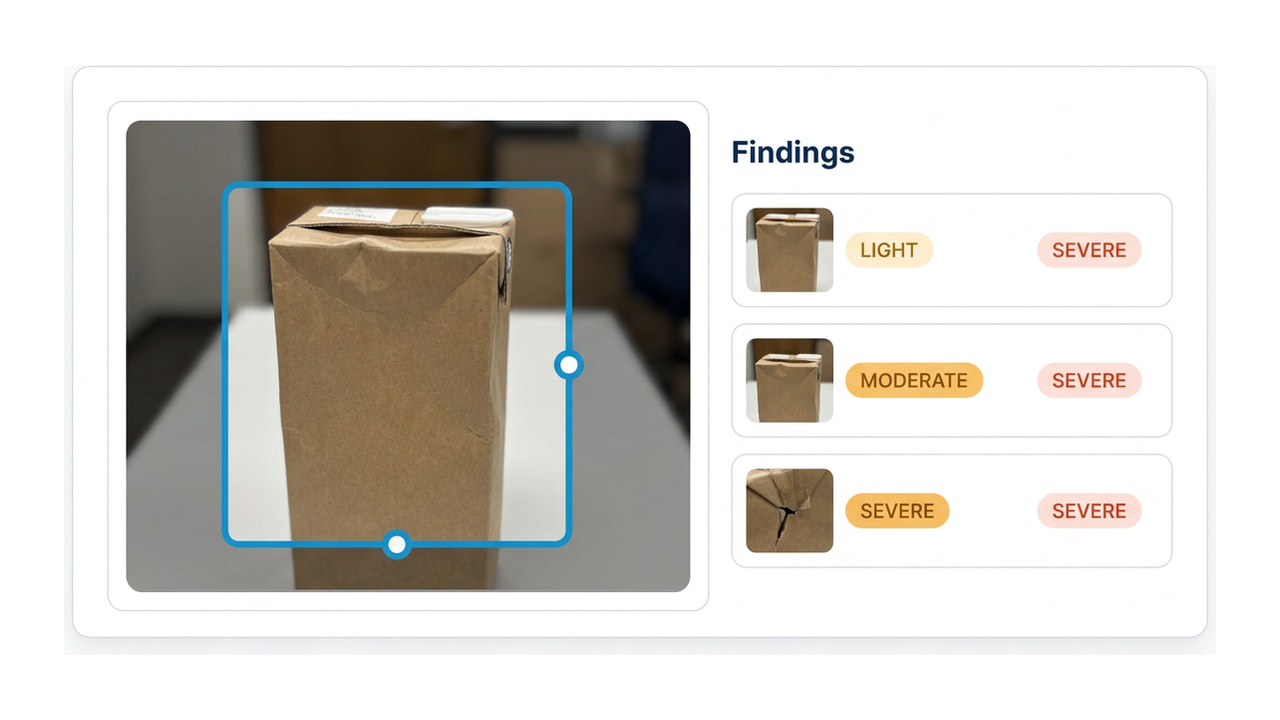
The photos to do this with already exist at your sites. What is missing is anything reading them fast enough for the first version of that conversation to be possible.
Across accounts and across sites
Per-client reporting
Findings carry the photo, the timestamp and the description, in a form you can forward to the client whose freight it is without editing it first.
Consistent standard everywhere
Multiple buildings, different crews, different levels of diligence — the same read applied to all of it, which is hard to achieve any other way.
Evidence for the carrier conversation
Damage identified at receipt, with condition recorded, is a claim against the carrier rather than an absorbed cost or an argument with your client.
Questions from 3PL operators
Our clients have different requirements and different SLAs.
Severity thresholds are a setting, so an account that wants to hear about everything and one that only wants severe findings can both be served from the same pipeline. Worth working out per account during the pilot.
Could we offer this to our clients as a service?
Several people have raised that and it is a reasonable direction. Talk to me directly about it rather than assuming the standard pricing fits — that is a different shape of arrangement.
How much work is this for our IT?
Close to none on your side. It runs over the API against wherever the photos already are, and we do the integration.
Try it on one account
Pick a client whose freight arrives damaged more often than you would like, and run a week of their photos through it.