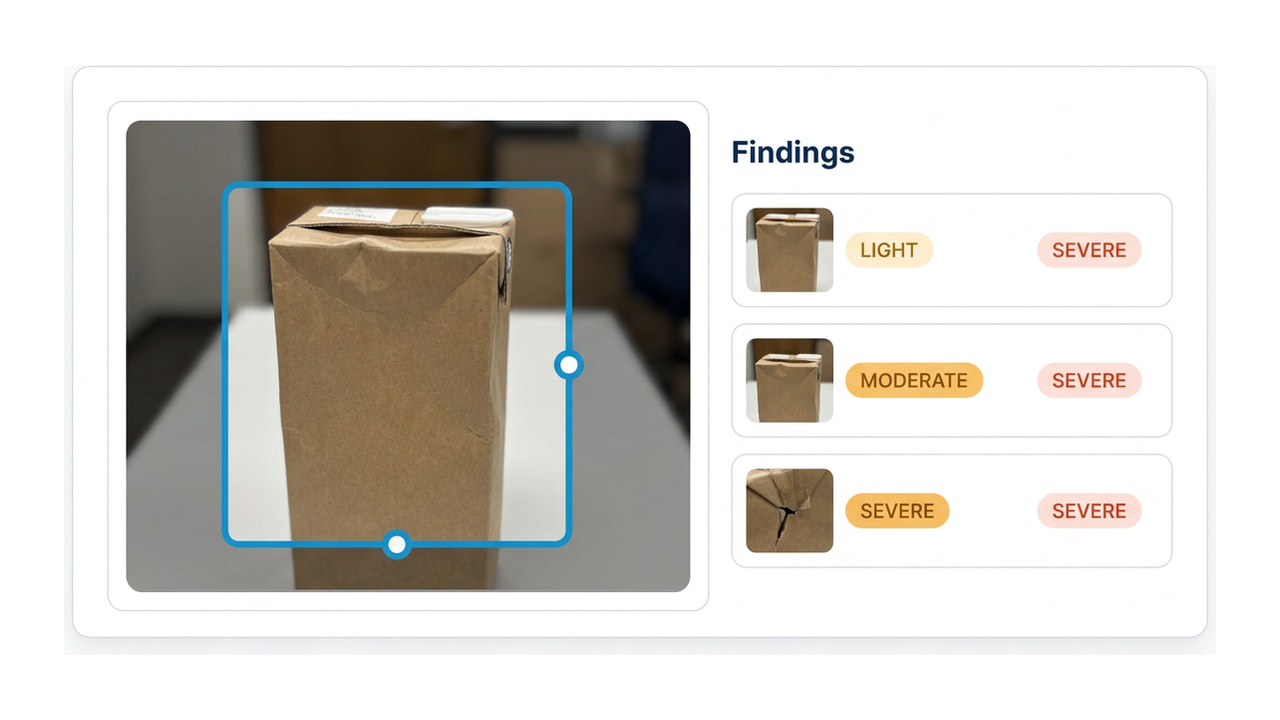

Know where in your building the damage happened
When a customer reports damage on freight that sat with you for a week, the question is not whether it is damaged. It is when it happened, and everyone involved has an incentive to believe it was somebody else.
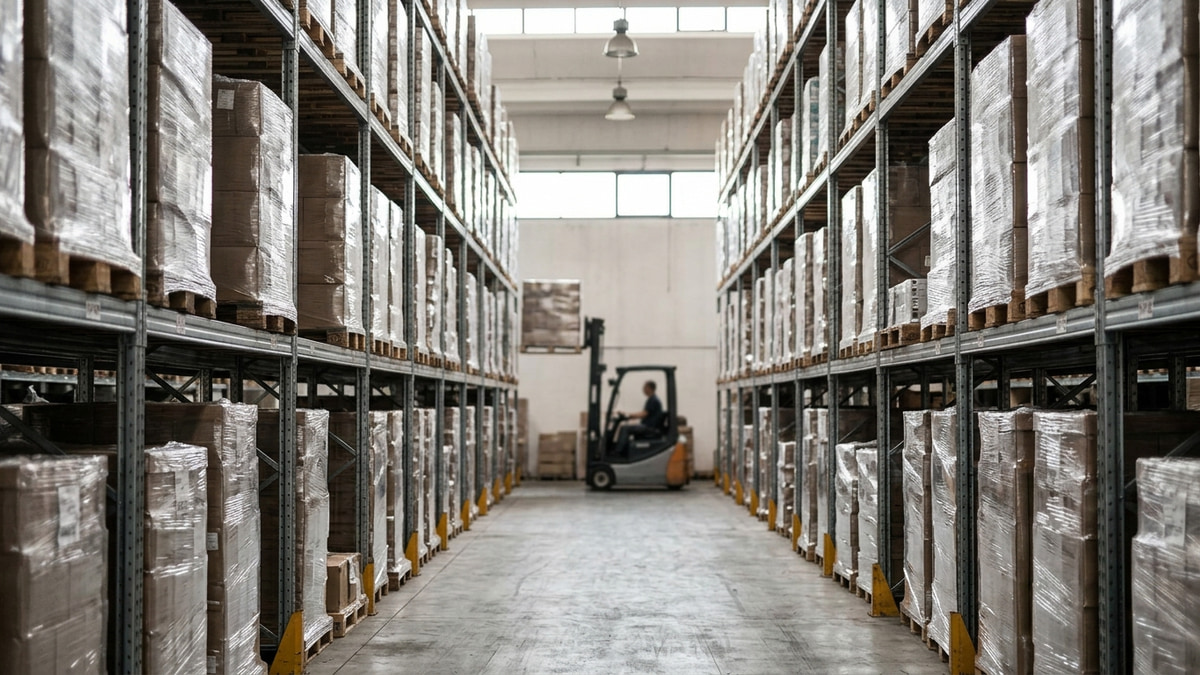
Internal damage is an attribution problem
Forklift strikes, tight racking, poor stacking, a pallet caught on a corner post — most in-house damage is nobody's deliberate fault and almost none of it gets reported by the person who caused it. It is discovered later, by someone else, with no way to say when it appeared.
The usual answer is more photos, and warehouses have already done that. The trouble is that photos only answer the question if somebody looked at them, and at the volume a working warehouse produces, nobody does. A folder of unreviewed images is not a record; it is the raw material for one.
Running detection on those photos turns them into a condition timeline. Intact at receipt, intact after put-away, damaged after the pick — that narrows the window to a shift and a location, which is the difference between a process fix and a shrug.
Where the photos already exist
Most operations are already capturing at more points than they realise. Each one is a checkpoint the timeline can use.
Receipt and put-away
Establishes the condition you accepted, and the condition after your equipment first touched it.
Cycle counts and audits
Photos taken for inventory purposes are perfectly good condition evidence, and nobody is looking at them for that today.
Pick, stage and load
The last look before it leaves. A finding here is one you would much rather discover than have your customer discover.
Questions from warehouse managers
We take thousands of photos a week. Is that a problem?
That is the case this is for. Pricing is per image beyond the included volume, so cost scales with what you actually send rather than with headcount or square footage — see the pricing page for the current numbers.
Will this be used to blame my staff?
That is your call, not the tool's, and it is worth deciding before you roll it out. The managers who described this problem to me framed it as process improvement — finding out that a particular aisle or a particular lift damages freight is more useful than finding out who was driving.
What if we only photograph at receipt today?
Then start there. A single reliable checkpoint at receipt is already worth having, and it is the cheapest one to add detection to because the photos exist.
Run it on a week of your photos
Send me a sample batch and I will run them and send back what the timeline looks like on your own freight.