
Product
A blurred photo cannot defend a claim
Freight photos are the asset the whole dispute turns on. A shot taken at 2am, out of focus, in bad light, or with the damage out of frame is worth nothing when you need it — and nobody finds out until the claim is already open.
The problem with finding out later
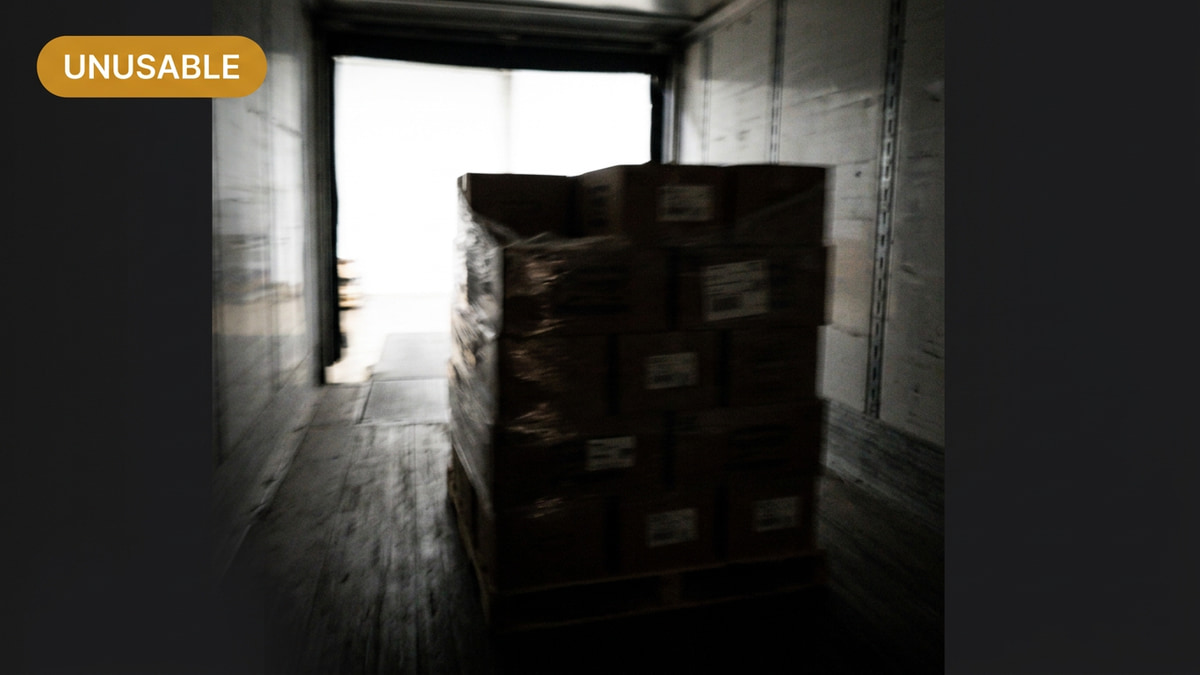
Photo quality fails quietly. The photo is taken, the batch is filed, and everybody moves on. Weeks later a customer disputes the condition of a shipment, somebody pulls the file, and the evidence turns out to be four dark blurs of a pallet that could be anybody's.
By then the freight has been delivered, unwrapped and possibly consumed. There is no retake. The cost is not just the claim you cannot defend — it is what those photos say about your operation to the customer looking at them.
The window in which this is fixable is short and it is early: while the freight is still on your floor and the person who took the photo is still nearby. That is the only moment a quality check is worth anything.
What gets flagged
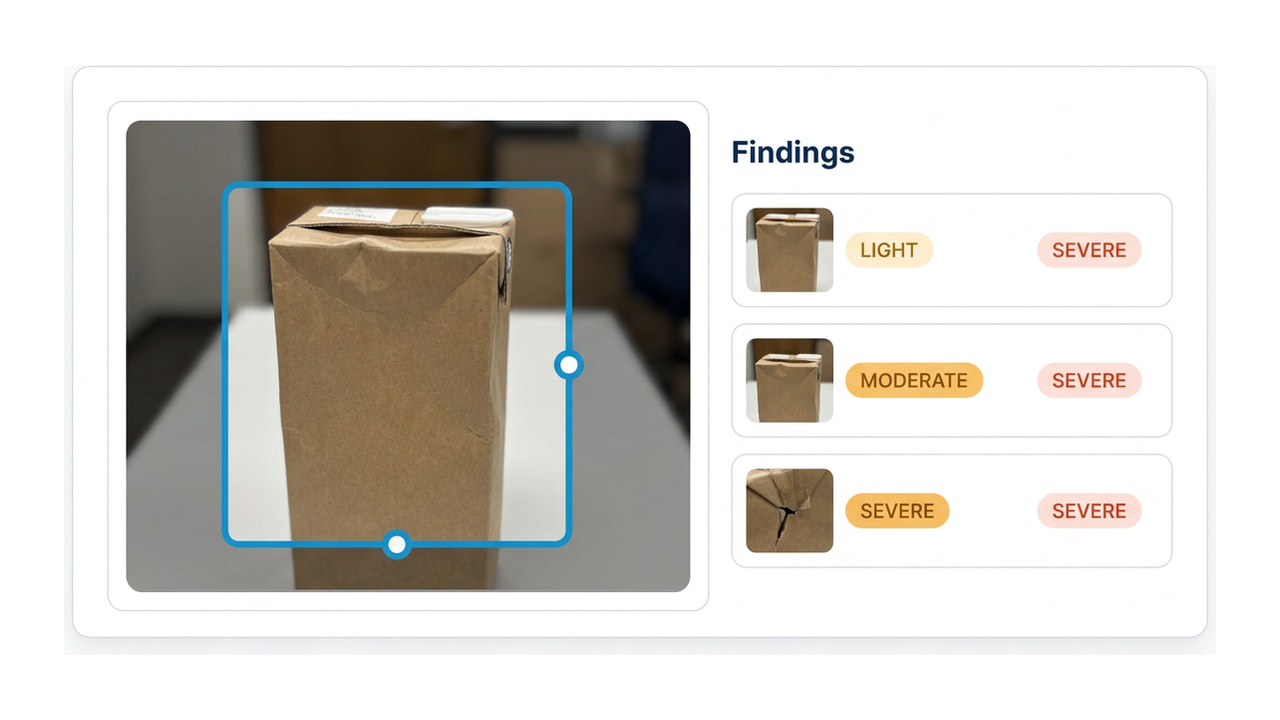
The check runs on every photo, alongside damage detection rather than instead of it. A photo can come back clean on quality and still carry findings, or come back unusable before any damage judgement is attempted.
Motion blur
The single most common failure on a busy dock — a photo taken while walking, or one-handed with a scanner in the other hand. Fine detail like a hairline crush or a small puncture is simply not recoverable from it.
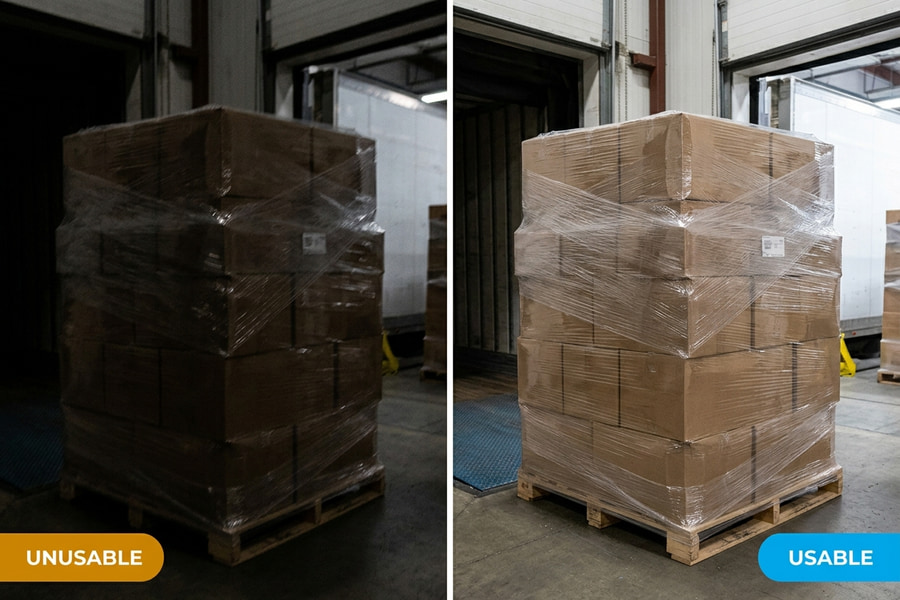
Underexposure
Night receiving, unlit trailer interiors, a pallet photographed against a bright doorway. The freight is technically in frame and effectively invisible.
Overexposure and glare
Direct sun on shrink wrap, or a flash bouncing straight back off it. Blows out exactly the surface you needed to see.
Freight not in frame
The shot that captures the forklift, the floor and half a pallet. Common when photos are taken in a hurry to satisfy a checklist rather than to document anything.
Too far, too close, obstructed
A pallet shot from across the bay, a close-up with no context for where it sits, or a view blocked by wrap, strapping or another load.
A verdict, not an error
When a photo cannot support a judgement, the report says so plainly instead of guessing. In a tool that people are going to trust, confidently describing damage that is not there is the one unrecoverable mistake.
What happens when a photo fails
The photo is marked unusable, with the reason
Not a score — a plain statement of what is wrong with it, so the person retaking it knows what to do differently.
Your team is told while the freight is still there
Within 1-2 minutes of the upload. This is the entire value of the feature: a retake is trivial in that window and impossible outside it.
The retake goes through the same check
And then through damage detection, so the record ends up with a photo that can actually carry it.
For brokers, this is the first problem, not the second
Warehouses control their own photo quality, at least in principle — the people taking the photos work for them. Brokers do not. Photos arrive from carriers and from third-party warehouses in whatever state those sites happened to produce, and the broker is the one holding them when a shipper asks what condition the freight was in.
The good ones already check by hand, and ask for retakes when a batch is unusable. That is a real job that somebody is doing manually today, on volume that makes doing it thoroughly impossible.
This is deliberately the second message
Quality control matters, but it is not why Teuscan exists — damage detection is. The two ship together and always have, because a damage verdict on a photo nobody can read is worthless.
If quality is the problem you actually have, that is fine and the product does it. But you should know which one we lead with, and why.
Questions this usually raises
Is this a separate product or an add-on?
Neither — it is part of the same analysis. Every photo gets a quality verdict alongside its damage verdict, at no additional cost and with no separate integration.
Can we run quality checks only, without damage detection?
You can act on only the quality verdicts if that is all you want, but both come back. It would be a strange thing to bill for separately given the model reads the photo once either way.
What counts as "unusable"? Who decides?
The standard is whether the photo can support a damage judgement at all, which is stricter than whether a person can tell what the object is. During a pilot we will look at real examples from your dock together and adjust where the line sits.
Will it reject photos my team thinks are fine?
Sometimes, early on, and you should tell me when it does. The threshold is a setting, not a law of nature — and a check that cries wolf gets ignored just as fast as a damage alert that does.
Upload a bad photo on purpose
The demo runs the same quality check. Send it something blurred or badly lit from your own dock and see what it says — no sign-up.